
This is a hard one, hard to write, might be hard to read, but it needs to be said.
I remember it like it was yesterday. Most of my work life had been in the food industry, but at the time, I had taken a break and was working for a road construction company. It was winter, bitterly cold, and since we couldn’t pave roads, we spent those months in the lab, mixing up new asphalt batches for the next season. It was monotonous work, until I got the call.
It was my wife. She was pregnant, and it was just a routine check-up. No big deal, right? But the second I heard her voice, I knew something was wrong.
“They couldn’t find a heartbeat.”
What?
“They couldn’t find his heartbeat.”
Our son, Isaac Stephen Gantt, had died in the womb.
I asked her to repeat it because my heart couldn’t process what my ears were hearing. But the words didn’t change. And in that moment, my whole world cracked.
The year that followed was absolute hell. We grieved in different ways. My wife’s pain was raw, open, right there on the surface. Mine? I stuffed it down, shoved it into a deep, dark corner, and tried to pretend it wasn’t there. She was Angry at God but ultimately turned back to him, and clung to Him like a lifeline. Me? I ran in the opposite direction. And that pain, the kind that sinks its claws into you and refuses to let go. The choices that followed almost destroyed my marriage in a few different ways. I won’t sugarcoat it. If not for the grace of God, I wouldn’t be here. If I had kept walking the road I was on, I would’ve died young and alone.
Fast forward. My wife and I were doing better, though things were still rocky. And then came another call.
“I’m pregnant.”
Now, before we go forward, we need to rewind… A lot.
Most people don’t know this, but I’m what they call a rainbow baby. My parents lost a late-term pregnancy just shy of a year before I was born. And while I know now, without a doubt, that they were over the moon about me, that my dad prayed over me every night, that he walked the town loop praying to God and prophesying over me that I would be strong in body and spirit. Any of you that know me get the humor in this and now know who to blame.
All that said, that didn’t change the fact that I felt like the replacement child. Like they didn’t really want me, they wanted my brother. And I was just what they got instead.
Again, I know that’s not true now. But for years, that thought sat like a stone in my soul.
So when my wife told me she was pregnant again, the fear hit me in two ways. First, the fear of losing another child. But second—maybe worse—the fear that this baby would grow up feeling like I did. Like they were a replacement.
So I did what I always did. I bottled it up. And I made mistakes.
Not the same mistakes as before. No, this time, I was determined that my daughter would never feel like a stand-in for her brother. So instead of honoring his memory, I just… stopped talking about him. I let him be forgotten.
And that? That was a mistake.
Not just for him, but for my wife, who still carried that grief every single year. And for me, because I let myself become numb. I pushed it so far down that I don’t even remember the anniversary of his death most years. But my body remembers. My soul remembers. Because every year around this time, I find myself quicker to anger, shorter with people, struggling to meet others where they are.
And that brings me to this past Monday night.
We were at Bible study, talking about the importance of listening. I started to speak about how it is important in the Church to make sure that we are taking time to listen and get to know people and not prioritize our program over the people so that way we can meet people where they are at. That’s what it’s about right? About meeting people where they are, not where we think they should be. And wouldn’t you know it, I failed to do just that. My own convictions, my own pain, twisting what I wanted to come out of my mouth. And I ended up causing an offense. It wasn’t my intention, but intention doesn’t undo impact.
It wasn’t until later, when I saw my wife post a picture of a small clay baby bootie we keep as a memorial, that it hit me. Grief doesn’t vanish. It doesn’t have an expiration date. And if we aren’t careful, it can warp how we see the world.
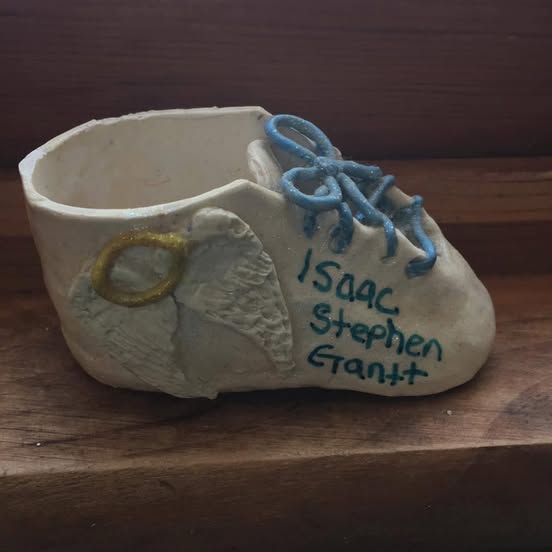
But hospitality, the kind that reflects the heart of God; is about presence. It’s about stepping into someone else’s pain, meeting them there, and walking with them through it.
Jesus did this. When Lazarus died,
Picture this: Jesus rolls into Bethany after Lazarus had been in the grave for four days, He already knew how this was going to end. He wasn’t walking in confused or unsure. He wasn’t hoping for the best. He knew, beyond a shadow of a doubt, that in just a short time, He would be calling Lazarus out of that tomb like a parent telling their kid to get out of bed for school. Yet, despite knowing the resurrection was coming, Jesus didn’t brush past the grief of His friends. He didn’t dismiss their sorrow or try to fast-track them to faith. Instead, He met them exactly where they were. And if we want to practice real, Christ-like hospitality, that’s what we need to learn to do, too.
Let’s be honest, if most of us had Jesus’ knowledge and power in this moment, we probably would have handled things very differently. If you or I strolled up to Bethany knowing a resurrection was on deck, we might have walked in with the energy of a game-show host:
“Ladies and gentlemen, hold onto your tunics because something INCREDIBLE is about to happen!” Or, if we were feeling extra spiritual, we might have just dropped a deep theological truth bomb: “Why are you crying? Don’t you believe? Where is your faith?”
But that’s not what Jesus did. Even though He was right, He didn’t insist that everyone immediately rise to His level of understanding. Instead, He came down to theirs. He met Martha in her frustration. He met Mary in her sorrow. And instead of rushing them forward, He sat with them where they were.
Martha, always the practical one, runs out to Jesus the second she hears He’s coming. And you can almost hear the mix of faith and frustration in her voice when she says, “Lord, if you had been here, my brother wouldn’t have died” (John 11:21). She believes in Jesus. She knows He has power. But she’s also hurting, and you can sense that unspoken why weren’t You here sooner? lingering in the air.
Jesus doesn’t scold her for questioning. He doesn’t tell her to settle down or lecture her on trusting God’s timing. Instead, He meets her where she’s at. He talks to her about resurrection, about hope, about who He is. He gives her something solid to hold onto in the middle of her pain.
Martha needed theology wrapped in empathy. And Jesus gave her that.
Then there’s Mary. Unlike Martha, she doesn’t come running. She stays in the house, wrapped in grief. And Jesus doesn’t wait for her to come to Him; He calls for her. When she finally comes and falls at His feet, she says the same thing her sister did (“Lord, if You had been here, my brother wouldn’t have died”), but instead of a theological discussion, Jesus responds in a completely different way.
He wept.
The shortest verse in the Bible, “Jesus wept” (John 11:35), carries some of the deepest meaning. He didn’t cry because He was hopeless. He didn’t cry because He had lost control. He knew He was about to raise Lazarus. But in that moment, that wasn’t the point. The point was that His friend was hurting, and He refused to rush her through her grief just because He knew a miracle was coming.
Mary didn’t need theology at that moment, she needed tears. And Jesus gave her that.
This is where a lot of us miss the mark when it comes to hospitality. We think of hospitality as bringing people into our world, our home, our food, our way of seeing things. And sure, opening our doors and serving a good meal is a beautiful part of it. But true, Jesus-style hospitality isn’t about making people fit into our space; it’s about meeting them in theirs.
It’s easy to offer people what we think they need. It’s much harder to slow down, pay attention, and offer them what they actually need. But that’s exactly what Jesus did.
He didn’t expect Martha to skip her emotions and go straight to faith. He didn’t demand that Mary dry her tears and “just trust the process.” He met each of them exactly where they were, even though He already knew where they were going. And that’s what true hospitality looks like.
So how do we take this from a touching Bible story to something that actually shapes the way we interact with people? Here are a few takeaways:
Read the Room, Not everyone processes things the same way. Some people, like Martha, need conversation and truth. Others, like Mary, just need you to sit with them in silence. Pay attention to what people actually need, not just what’s easiest to give. This is the one that I struggle with the most.
Sit Before You Serve, We love to do things for people. Cook for them, help them, give them advice. But sometimes, the best hospitality is just being there. Before you rush to fix, just be present.
Don’t Rush People to Where You Are, Just because you see hope doesn’t mean the other person is ready to yet. Let them grieve. Let them process. Walk with them instead of dragging them forward.
Step Into Their World, Jesus didn’t insist that Martha and Mary come to His mindset before He interacted with them. He stepped into theirs. If we want to show real hospitality, we have to do the same.
Jesus shows us that hospitality isn’t just about opening our homes, it’s about opening our hearts. It’s about seeing people, truly seeing them, and meeting them where they are instead of expecting them to meet us where we are.
So, the next time someone walks into your life carrying grief, doubt, exhaustion, or just a heavy heart, remember: you don’t have to fix them. You don’t have to rush them. Just be like Jesus. Sit with them. Listen. Weep when they weep. And when the time is right, remind them of hope.
Because sometimes, the most Christlike thing we can do isn’t to preach, teach, or serve a perfect meal…it’s simply to feel.
Stay Salty
 Salt, Light, & Hospitality
6 responses to “Grief, Hospitality, and the Jesus Way: Meeting People Where They Are”
Hello Andrew. Thanks for your story, true story! I needed to be reminded of Jesus’ way of meeting people in their grief. I am too quick trying to fix. Lucine
LikeLike
Thank you…..it is something we all need to remember
LikeLike
Man… I didn’t wake up wanting to cry but you went and did it. That was raw and tangible.
LikeLiked by 1 person
A wise person once told me that there may be something buried deep and is catching the plow. I’m just looking to make sure that I have my field ready for when the Lord sends rain.
LikeLiked by 1 person
“He refused to rush her through her grief [even though] He knew a miracle was coming.” I love that. I think maybe I’ve been trying to rush people through things.
Isn’t hard to feel another’s grief/despair when you yourself are filled with joy and hope though? I want people to have that same peace, joy, and hope, not wallow in misery. I know Jesus does too, and yet, as you pointed out, he grieved with them. This is a powerful thought for me right now. I’m still trying to wrap my mind around it.
This was great food for thought, and I love that you offer some action steps.
Thanks for sharing your insights and some of your heart. Love you, brother.
LikeLike
Thank you I am so grateful for the response to this post and even if only one person got something from it it was worth writing it.
LikeLike