In the quiet hills of Vermont, where snow blankets the world in December and the church steeples stand like sentinels of hope, my home church had a tradition that embodied the true spirit of Christmas. Every year, they set out a simple table. It wasn’t adorned with fancy decorations or filled with expensive gifts; instead, it was a collection point for items donated by members of the congregation.
The items on this table weren’t flashy or new but gently used treasures—clothes, toys, books, and household items—that still had plenty of life left in them. These donations became gifts for those in need, a way for our little church to extend hospitality and generosity during the holiday season. Watching this table fill up year after year was like witnessing God’s provision in action, a small miracle of kindness and community.
When my wife and I had kids, we wanted to instill in them this same spirit of giving. That’s when the Yearly Toy Purge was born.
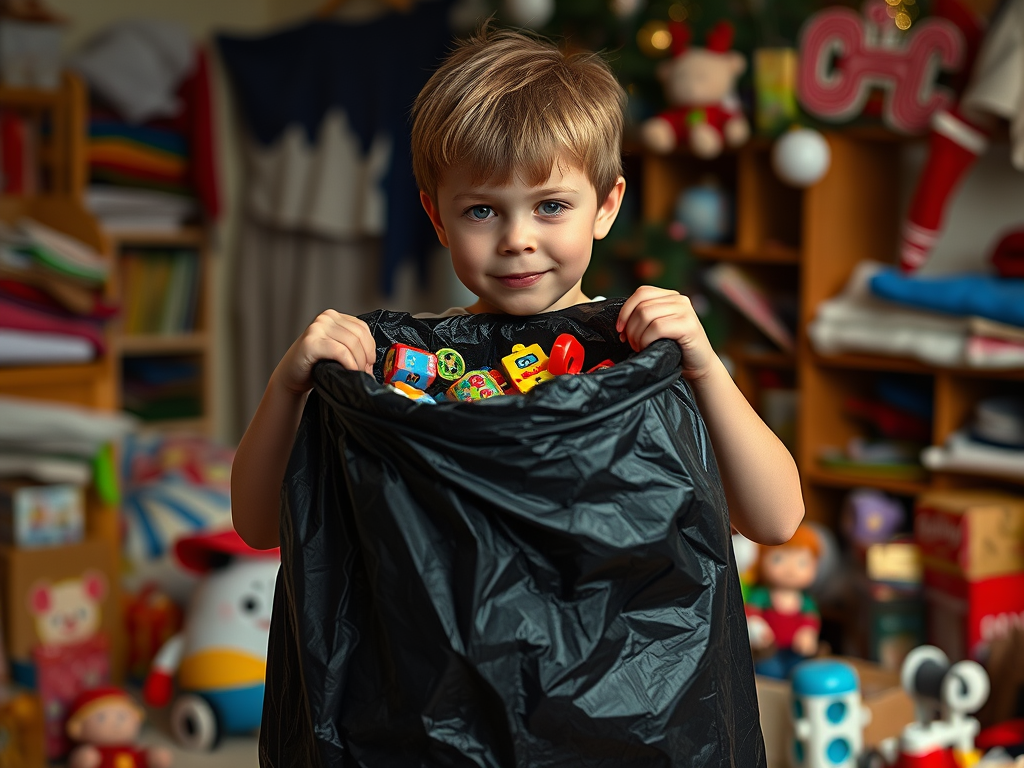
The Yearly Toy Purge
Every December, as the Christmas season approached and the house began to fill with the anticipation of new presents, we handed each of our kids a large bag and gave them one simple instruction: Fill it.
At first, this was met with mixed reactions. Our kids were young, and the idea of parting with their toys was, let’s say, less than thrilling. They’d try to sneak in toys with missing parts, ripped books, or clothes that had seen better days. That’s when the life lesson kicked in.
“Would you want to receive this as a gift?” we’d ask.
The kids would pause, realizing that broken toys and ruined clothes weren’t gifts—they were trash. We explained that generosity isn’t about giving what you don’t want; it’s about giving something that can bring joy or be useful to someone else. Over time, they learned the difference, and the Yearly Toy Purge became less about clearing space and more about sharing blessings.
The Joy of Giving
What started as a teaching moment for our kids soon became one of our family’s favorite traditions. Each year, we’d fill the bags with gently used toys, clothes, and books, load them into the car, and head to the church to drop them off.
There was something magical about seeing the table at church fill up, knowing that each item would find its way into the hands of someone who needed it. And the best part? Watching the items disappear. A toy dinosaur would vanish one day, a puzzle the next. We’d smile, knowing that somewhere out there, a little boy or girl was receiving a gift they might not have had otherwise.
The joy in our kids’ faces as they watched the fruits of their generosity unfold was something words can barely capture. They no longer needed reminders—it was the kids who started reminding us when it was time for the yearly donation.
The Spirit of Hospitality
The table at our church wasn’t just a collection point for donations; it was a symbol of the hospitality of generosity.
In 1 Peter 4:10, we’re reminded:
“Each of you should use whatever gift you have received to serve others, as faithful stewards of God’s grace in its various forms.”
That table was an open invitation to live out this verse. It wasn’t about giving flashy or expensive gifts but about offering what we had to serve others. It taught our family—and our whole church—that hospitality isn’t just about welcoming people into your home. It’s about opening your heart and sharing what you’ve been blessed with to bless others.
Life Lessons for the Holidays and Beyond
Through this tradition, our family learned several invaluable lessons:
Generosity Begins at Home
The Yearly Toy Purge wasn’t just about cleaning out closets; it was about cultivating a habit of giving. Our kids learned that generosity starts with recognizing the blessings you have and being willing to share them.
Giving Is a Form of Hospitality
Hospitality isn’t always about inviting people into your home. It can be as simple as giving someone a toy, a book, or a piece of clothing that says, “You are seen, and you are valued.”
The Joy of Selflessness
There’s a unique kind of joy that comes from giving. Watching our kids find happiness in sharing their belongings reminded us of Acts 20:35:
“It is more blessed to give than to receive.”
Thoughtfulness Matters
Teaching our kids to give thoughtfully—to only donate items in good condition—reinforced the idea that generosity isn’t about getting rid of junk. It’s about honoring the dignity of the recipient.
Keeping the Spirit Alive
Though we’ve moved away from Vermont, the tradition of the Yearly Toy Purge remains a cornerstone of our holiday season. It’s more than just a family activity—it’s a way of keeping the spirit of hospitality and generosity alive.
As the kids have grown, so has their understanding of why we give. They know that the act of giving isn’t just about the items; it’s about the message those items carry. Each toy, each piece of clothing is a small token of God’s love, passed from one person to another.
And every year, when we see the joy on our kids’ faces as they load up their bags, or when we picture the smiles of the children receiving the gifts, we’re reminded of one simple truth:
Hospitality, at its core, is about making space—for others, for generosity, and for the love of Christ to shine through.
A Tradition Worth Sharing
The table at our church in Vermont might have been a simple idea, but its impact was profound. It taught us all that hospitality doesn’t require grand gestures or perfect circumstances. It just requires a willingness to give and a heart open to serving others.
So this holiday season, whether it’s through a toy purge, a donation table, or simply opening your home to someone in need, take a moment to reflect on the hospitality of generosity. Because in giving, we don’t just share our blessings—we create space for the love of God to work in and through us.
When you picture the Magi—the wise men rolling into the Christmas story—you probably see three regal figures with robes and camels, following a star like it’s the ultimate GPS. They arrive bearing gifts that would put any Secret Santa exchange to shame: gold, frankincense, and myrrh. But who were these travelers, really? And what can their story teach us about how to live with hospitality, faith, and generosity? Let’s dig into their backstory, their cameo in the greatest story ever told, and the lessons they left us—bonus points for how it all connects to St. Nick and some of our favorite Christmas traditions.
Who Were the Magi, Anyway?
The word “Magi” comes from the Greek magoi, which sounds fancy because it was. These guys were a priestly crew from ancient Persia, experts in astronomy, spirituality, and ancient prophecies. Think of them as the Ph.D. theologians-slash-astrologers of their time.

Their lineage likely links back to the days of Daniel (yes, the lion’s den guy). Remember when Daniel was in Babylon, interpreting dreams and climbing the royal ladder? He probably dropped some Jewish Messianic prophecy knowledge on these scholars, setting the stage for the Magi to anticipate a King like no other.
When they saw that star, they didn’t just hop on a whim and say, “Road trip!” These men were the real deal—wise, learned, and dedicated to finding the truth, even if it meant a brutal journey.
The Magi’s Big Moment
Cue Matthew 2:1-12. The Magi arrive, gifts in hand, ready to honor the newborn King. But let’s pause here and dig into why their gifts and journey matter so much.
The Gifts
Gold: Fit for a king. Jesus wasn’t just any baby—He was the King.
Frankincense: Symbolizing worship and divinity, pointing to Jesus as our High Priest.
Myrrh: Spicy foreshadowing alert! Myrrh, used in burial, pointed to His ultimate sacrifice.
These weren’t just random trinkets they picked up at a duty-free shop. The Magi knew who Jesus was, and their gifts reflected His identity and mission. On a practical note, these treasures probably funded Mary and Joseph’s escape to Egypt. Talk about timing.
The Journey
These guys didn’t Uber their way to Bethlehem. They trekked from the East—likely Persia or Babylon—facing dangers and discomfort because they believed honoring Jesus was worth it. Hospitality, in this case, meant bringing their very best, even when it was inconvenient.
The Humility
Here’s the kicker: despite their wealth and wisdom, the Magi knelt before a child born in a humble setting. They remind us that true greatness bows to true holiness, recognizing God in unexpected places.
The Magi’s Influence: Passing the Torch
The Magi weren’t just travelers—they were legacy builders. Their knowledge of the Messianic prophecies wasn’t accidental. It came from centuries of faithful teaching and preparation, starting with Daniel’s influence.
Passing down truth, whether through mentorship, teaching, or storytelling, is its own act of hospitality. Proverbs 11:25 nails it:
“Whoever brings blessing will be enriched, and one who waters will himself be watered.”
The Magi’s dedication to preserving and sharing this knowledge meant that, when the moment came, they were ready—and they helped others see the light, literally.
Hospitality Lessons from the Magi
The Magi’s actions are like a masterclass in hospitality. Let’s break it down:
Generosity
Their gifts weren’t just thoughtful—they were sacrificial. Similarly, we’re called to give with intention, whether it’s our time, talents, or treasures. Remember 2 Corinthians 9:7:
“God loves a cheerful giver.”
Sacrifice
Hospitality isn’t always convenient. The Magi left their homes, braved hardships, and offered their best. Real hospitality often requires stepping out of our comfort zones to serve others.
Welcoming the Stranger
The Magi’s inclusion in the Christmas story is a nod to God’s inclusive hospitality. Gentiles honoring the King of the Jews? That’s Galatians 3:28 in action:
“There is neither Jew nor Gentile… for you are all one in Christ Jesus.”
From the Magi to St. Nicholas: A Legacy of Generosity
Fast forward a few centuries, and we meet St. Nicholas, the OG Santa Claus. Like the Magi, Nicholas was all about selfless giving to honor Christ.
Generous Giving
St. Nicholas is famous for slipping dowries to poor families, saving daughters from slavery. The Magi’s gifts weren’t just symbolic; they were practical, too. Both show us how generosity meets both physical and spiritual needs.
Defender of Truth
Nicholas wasn’t just a gift-giver; he also threw down (literally, if the Nicaea stories are true) for the truth of Christ’s divinity. The Magi’s gifts proclaimed Jesus’s identity, just as Nicholas defended it.
Christmas Symbols: Signs of Hospitality
Before you dismiss Christmas traditions as “too commercial,” remember their deeper meanings:
The Star: It guided the Magi and symbolizes divine hospitality, reminding us to seek and find Christ (Matthew 7:7).
The Evergreen Tree: A picture of eternal life, its lights representing Jesus as the Light of the World (John 8:12).
Gift-Giving: Inspired by the Magi and St. Nicholas, this tradition reflects God’s ultimate gift—His Son (John 3:16).
Living the Magi’s Legacy
This Christmas, let’s follow the Magi’s lead:
Give Generously: Offer your best to others, whether it’s your time, energy, or resources.
Welcome the Stranger: Embrace those outside your usual circle with God’s love.
Pass Down Wisdom: Share truth and guidance with the next generation.
Stand for Truth: Defend the gospel with grace and humility.
The Magi’s story is about more than a long journey and fancy gifts. It’s a reminder that hospitality, generosity, and faith are acts of worship that reflect God’s heart. As we celebrate this season, let’s embody their legacy, leading others to the Light just as they followed the star to the King.
 Salt, Light, & Hospitality