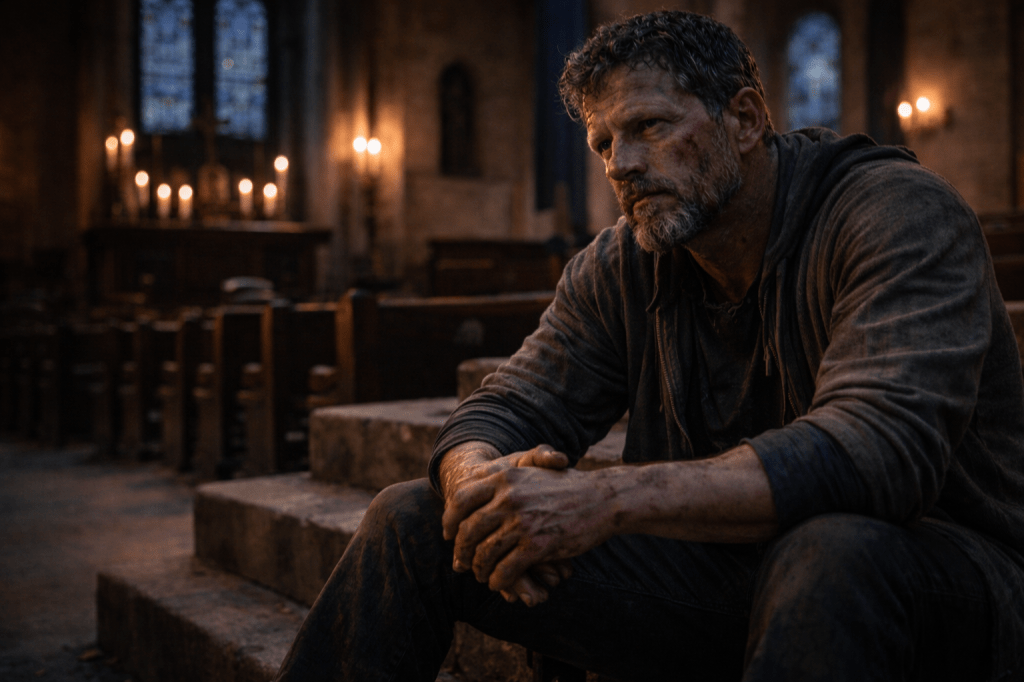
One of my oldest friends still works in the kitchen industry. We go way back, kids church, youth group, high school basketball, busted knuckles, cheap sneakers, and dreams that were way bigger than our vertical jump.
We had a coach who was old-school in the way that builds men or makes you transfer schools. He had one rule that stuck.
“You get two minutes.”
That’s it. Two minutes.
You airball a shot? Two minutes to be mad.
You get elbowed in the mouth and taste your own blood? Two minutes to cry.
You hit the game-winning three? Two minutes to celebrate.
Two minutes for yourself. then your focus goes back to the team and the task.
My buddy took that into the kitchen. Burned his hand? Two minutes. Ticket times backed up and the printer sounds like a machine gun? Two minutes. Crushed a service and the dining room is clapping? Two minutes.
Then it’s back to work.
And the older I get, the more I realize: That rule isn’t just for basketball. It’s not just for kitchens. It’s for life. It’s for ministry. It’s for leadership.
Because Jesus hasn’t come back yet. The task is still at hand.
Picture This: David is wrecked. His son Absalom, the one who betrayed him, tried to overthrow him, humiliated him publicly, is dead.
And David is weeping.
Not the polite tear wipe. Not the “I’m fine, brother” sniffle. He is ugly crying. “O my son Absalom! O Absalom, my son, my son!” And here’s the tension: The army just won.
The men just fought.
Bled.
Risked their lives.
And instead of celebration, they sneak back into the city like they lost. Why? Because their king is emotionally gone. Victory turned into mourning.
Listen to me carefully: Your private grief can accidentally dishonor the people who fought for you. David had every reason to cry. But he didn’t have the right to disappear. You get two minutes.
Grieve.
Scream.
Punch a pillow.
But the kingdom still needs leadership.
Now let’s talk about Joab. Joab is messy. Violent. Not exactly the poster child for gentleness. But in this moment? He’s right. He walks into the house and tells David straight: “You have humiliated your men.” That’s a hard word. But here’s the truth: Even Joab was right to remind David he needed to get to the gate.
Sometimes the guy with rough edges is the one who tells you what your soft heart doesn’t want to hear. “You love those who hate you and hate those who love you.” Translation: You’re so consumed with what hurt you that you’re neglecting who stood with you.
That’ll preach.
You had a ministry win? Two minutes. You preached and the altar filled? Two minutes. You launched the youth group and it doubled?
Two minutes. Then back to loving the people in front of you.
You got hurt in ministry? Someone left the church? Someone misunderstood you? Someone didn’t clap for your obedience?
Two minutes. Then back to work.
Because hospitality doesn’t stop when your feelings are bruised.
Verse 8 says: “So the king got up and took his seat in the gateway.” That’s it. He got up. And he sat in the gate. The gate was the place of leadership visibility. Justice happened there. Decisions happened there. People came there.
David didn’t give a speech. He didn’t post a statement. He didn’t start a podcast called “Processing My Pain.” He showed up. And the men returned.
Hospitality sometimes looks like this: Show up while you’re still bleeding.
Not faking joy.
Not denying grief.
But refusing to let your wound make you inaccessible. If you disappear every time you’re hurt, you’re not leading, you’re hiding. And hiding leaders create insecure communities.
Let me say this plain. You don’t get to build your entire identity around:
The sermon that went viral. The church that rejected you. The leader who didn’t see your gift. The betrayal that blindsided you. The comment section that stung.
Two minutes.
You cry about it. You pray about it. You let God deal with your ego about it.
Then you get back to the gate.
Because the Great Commission didn’t pause when your feelings got hurt. Jesus didn’t say: “Go into all the world… unless someone posts something passive aggressive about you.”
No.
The mission continues. Hospitality continues. The table must still be set.
Let’s walk through the rest of the chapter. Shimei, the man who cursed David publicly, comes crawling back. Abishai wants to kill him.
Honestly? It would’ve been satisfying.
But David says: “Should anyone be put to death in Israel today?”
In other words: “I don’t need to flex.”
That’s wounded hospitality. He could have crushed Shimei. He had every legal right. But mercy stabilized the kingdom. When you’re wounded, the temptation is to become sharp.
Sarcastic.
Cold.
Unreachable.
But biblical hospitality says: Make room for repentance. Even when it cost you something. Especially when it cost you something.
Then Mephibosheth shows up. He hasn’t trimmed his beard. Hasn’t washed his clothes. Hasn’t groomed himself since David fled.
Why?
Because the table mattered. David once brought this crippled grandson of Saul into his house and said: “You will always eat at my table.” Hospitality builds covenant memory.
When someone eats at your table, you are building something deeper than a meal. You’re building loyalty that survives chaos. That’s why Salt, Light & Hospitality isn’t about cute centerpieces.
It’s about covenant.
When David returned, Mephibosheth didn’t argue for land. He said: “Let him take everything, now that my lord the king has returned safely.” That’s table-formed loyalty.
Barzillai is eighty years old. He provided for David when David was in exile. He didn’t serve a throne. He served a wounded man.
That’s biblical hospitality.
Not networking.
Not ladder climbing.
Not proximity to power… Just provision.
When David offers to reward him, Barzillai says: Give it to the next generation. That’s mature hospitality.
Serve now.
Bless forward… No strings.
At the end of the chapter, Judah and Israel start arguing. “Why did you bring the king back?” “We have more claim!” “No, we do!”
And there it is.
Hospitality turns political. It becomes about access.
Closeness.
Credit.
Sound familiar?
Churches fight over who is closer to leadership. Who gets more influence. Who was first. And division creeps in. Hospitality that becomes territorial stops being hospitality. It becomes possession. And possession kills unity.
Now let’s bring this home. Showing hospitality while wounded does not mean burning out. This is not: “Stuff your feelings and grind.”
No.
This is: Rest. Restore. Receive from God.
Then show up in love.
David didn’t pretend Absalom didn’t matter. He grieved. But he didn’t stay locked in the room. You cannot lead from emotional collapse forever. You cannot host from bitterness. You cannot disciple from insecurity. If you don’t rest, you will start bleeding on people who didn’t cut you.
Hospitality must flow from restoration. From love. From remembering that you were once the one who needed mercy.
Let’s talk about the real King. Jesus, hanging on a cross, says: “Father, forgive them.” That’s hospitality while wounded. After the resurrection, what does He do? He cooks breakfast for His disciples.
The men who ran.
The man who denied Him.
He sets a table.
Wounded. Scarred. Still hosting…. You get two minutes.
Cry in Gethsemane. Then carry the cross. Celebrate the empty tomb. Then restore Peter…. Mission continues.
Let’s stop pretending hospitality is soft. Hospitality is not doilies and soft piano music in the lobby. Hospitality is warfare.
In 2 Samuel 19, everything happening under the surface is spiritual tension. A kingdom just survived civil war. Loyalties are fractured. Tribes are arguing. A son is dead. A father is grieving. A commander is rebuking. Old enemies are bowing. Old friends are proving loyalty. This isn’t a Hallmark moment. This is a battlefield with chairs set up on it. And David sitting in the gate is not weakness, it’s strategy.
Because the enemy’s plan was not just to kill David. It was to fracture the kingdom beyond repair. Division is always the deeper goal.
Absalom’s rebellion was warfare. The tribal arguments at the end of the chapter? Warfare. The tension between Judah and Israel? Warfare. And what stabilizes the nation?
Presence.
Mercy.
Public reconciliation.
Relational honor…. Hospitality.
When David refuses to execute Shimei, he is not being sentimental. He is shutting down a cycle of vengeance that would have ignited more bloodshed. When he honors Mephibosheth, he is reinforcing covenant loyalty over suspicion. When he receives Barzillai with gratitude, he is strengthening generational alignment.
Every one of those moments is strategic.
Every act of hospitality pushes back chaos.
Let me make it plain: Every time you set a table while wounded, you are declaring that division does not get the final word. Every time you welcome someone who once criticized you, you are stepping on the neck of bitterness. Every time you show up to the gate instead of hiding in your grief, you are resisting the enemy’s attempt to isolate you.
Isolation is the devil’s playground. Hospitality is how you burn it down.
In ministry, warfare rarely looks like horns and pitchforks. It looks like hurt feelings. Miscommunication. Ego. Tribal loyalty. Subtle resentment. It looks like people sneaking back into the city ashamed when they should be celebrated. And if the leader disappears, the fracture widens.
But when the leader sits in the gate, wounded but present, something shifts in the spiritual atmosphere.
Morale returns.
Hearts realign.
Stability strengthens.
That’s not sentiment… That’s warfare.
The enemy wants leaders locked in rooms licking wounds. God wants leaders at gates restoring people. Hospitality is not passive. It is defiant. It says: “This house will not fracture.” “This table will not shrink.” “This kingdom will not splinter on my watch.”
You think making breakfast for the men who denied you is soft? Ask Jesus.
Wounded hands flipping fish over a charcoal fire is not fragility.
It’s victory.
So don’t ever reduce hospitality to niceness.
It is a weapon.
And when you wield it from a place of rest, restoration, and love, you don’t just feed people. You fortify kingdoms.
You had a win? Two minutes.
You got hurt? Two minutes.
You felt unseen? Two minutes.
You preached your heart out and nobody responded? Two minutes.
Then get to the gate. Because someone is watching your posture. Someone needs your presence. Someone is deciding whether to stay based on whether you show up.
Even Joab knew: If David didn’t sit in the gate, he’d lose the men.
If you don’t sit in the gate.
If you disappear into your wound.
Someone less merciful will fill your seat. And they won’t build what you were called to build.
So rest.
Heal.
Cry if you need to. But don’t stay in the room.
Sit in the gate.
Set the table.
Love anyway.
Because the King is still building His kingdom. And until He returns, We’ve got work to do.
Stay Salty & Burn Bright
 Salt, Light, & Hospitality