Let’s cut straight to it: far too often, the church has turned hospitality into a polite suggestion instead of a spiritual imperative. We’ve traded the messy, dangerous, life-giving work of noticing need and meeting it for passive waiting: “Well, someone hasn’t asked for help yet, so I guess I’m off the hook.” That’s not biblical. That’s lazy, and it costs lives, physically, emotionally, and spiritually. And if you think I’m exaggerating, pull up 2 Samuel 16 and meet Ziba.
David is running. His son Absalom is staging a coup, the kingdom he bled for is unraveling beneath his feet, and betrayal hangs in the air thicker than the dust kicked up by his army. He’s exhausted. Emotionally, physically, spiritually, he’s a wreck. And right there, waiting like a saint in the wilderness, is Ziba.
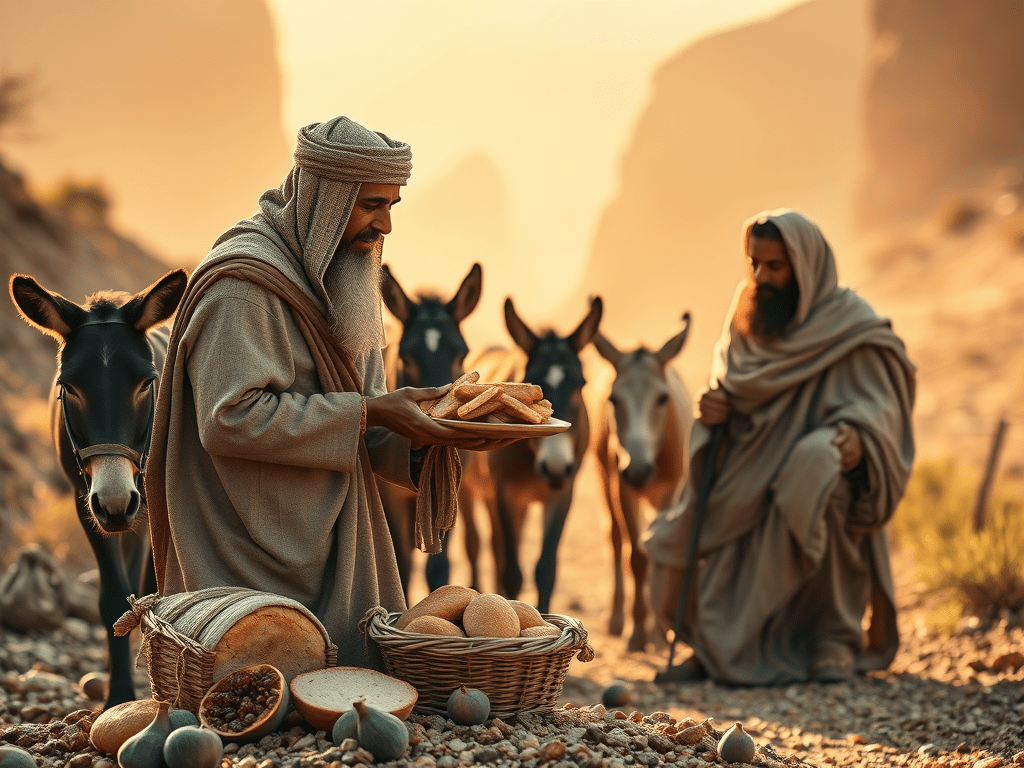
Ziba isn’t asking, “Do you want a hand?” He isn’t holding a suggestion box. He didn’t text David to see if he was hungry first. No. He saddled donkeys, loaded them with bread, raisins, figs, and wine, and met the king on the road. He saw a need, and he acted. This is the type of hospitality the Bible celebrates.
Here’s the first lesson, and I’ll be blunt: hospitality isn’t frilly. It’s not about fancy tables, Pinterest boards, or “how to make someone feel special” posts for Instagram. It’s about survival, provision, and tangible care. Ziba didn’t bring incense sticks and a good vibe, he brought food, donkeys, and wine. He was a lifeline.
Donkeys, for rest. These men had been walking, running, fleeing. Their bodies were breaking. A donkey wasn’t a luxury; it was salvation.
Bread, raisins, figs, for nourishment. The Bible is full of examples like this. Elisha tells the widow to feed her son, knowing provision will meet the need and keep life intact (2 Kings 4). Feeding someone is often the first step to sustaining them for their calling.
Wine, for refreshment. Because sometimes survival is about more than stomachs. Sometimes it’s about giving a man the chance to breathe before the next storm hits.
Notice a pattern? Hospitality in the Bible is messy, real, practical, and lifesaving. It’s about seeing someone at their breaking point and meeting them there. Hebrews 13:2 says, “Do not neglect to show hospitality to strangers, for thereby some have entertained angels unawares.” That’s a wild image, angels in disguise. God Himself in need. And how often does the church miss them because we are too busy waiting for someone to “raise their hand” or fill out a help request form?
Let’s be honest: when the body of Christ waits for permission to serve, it fails. People starve emotionally, spiritually, sometimes even physically, while we argue over protocol, committees, and policies. David’s men could have gone without food. David himself could have collapsed from exhaustion. But Ziba saw the need and acted. This is the type of aggressive, initiative-taking, life-giving hospitality we are called to.
Now let’s get a little darker. Hospitality isn’t just about bread and wine, it’s about alignment, allegiance, and spiritual warfare disguised as service. Ziba knew who he was serving. He didn’t just serve David because it felt good or looked righteous; he served him because loyalty in a moment like this matters.
Look at the stakes: David is fleeing his own son. Absalom is taking over the kingdom. Ziba’s actions are political, yes, but also profoundly spiritual. By giving, by providing, he’s saying, “I see the king. I honor the covenant. I participate in what God is doing.” That’s a lesson the modern church has forgotten.
Too often, the church wants to offer hospitality as a neutral, flavorless service. “Here, take a plate of food, or come sit down, or borrow a cup of sugar.” But biblical hospitality communicates allegiance. When we serve in the right moment, we step into God’s plans. We honor the covenant relationships He has established, whether that’s in a family, a friendship, a church, or even a ministry.
Hospitality is a statement. It’s loyalty tattooed on actions, not a cute phrase on a poster. Ziba may have had ulterior motives (he probably did; the Bible is brutally honest about human selfishness), but the act itself carried life, honor, and alignment with God’s purpose.
Hospitality in contrast to betrayal and cursing
If Ziba is a picture of life-giving action, then Shimei is the picture of what happens when the body of Christ sleeps at the wheel. David is bombarded with curses, stones thrown, insults hurled. Shimei doesn’t bring bread; he brings death and despair.
This contrast is critical: Ziba nourishes and restores life. Shimei attacks and degrades, spreading chaos.
Hospitality isn’t just nice, it’s a weapon against destruction. Proverbs 11:25 says, “Whoever brings blessing will be enriched, and one who waters will himself be watered.” That’s a two-way street: when we meet needs proactively, life flows in both directions. Conversely, when we sit on our hands or throw rocks from a hill like Shimei, we damage the body, ourselves, and the kingdom.
This is what happens in churches that wait for the perfect ask, the proper invitation, or a committee approval. People get hurt, the community frays, and the next person coming through the door meets a body already exhausted, already fractured, already wounded. Meanwhile, the potential for restoration, for refreshment, for the miracle of God’s plan hitting its mark quietly in the background, slips through our fingers.
This is the lesson most churches refuse to hear. Ziba doesn’t wait to be asked. He doesn’t wait for a bulletin announcement. He doesn’t wait for someone to file a request in triplicate with the temple office. He sees the need and meets it.
Jesus makes this explicit throughout His ministry. He doesn’t wait for someone to request healing or help. He notices: the blind man on the roadside, the widow at the tomb, the leper at the edge of the village, and He acts. Luke 7:11-17, the widow of Nain, for example: Jesus sees her grief and acts before she asks. Hospitality, in its biblical form, is eyes open, hands ready, feet moving.
When the church waits to be told what to do, here’s what happens: Needs fester. Emotional wounds deepen. Spiritual momentum is lost. Members feel invisible. The body loses cohesion. Leadership becomes reactive instead of proactive, always putting out fires instead of preventing them.
And here’s the kicker: proactive hospitality depends on relationship awareness. You can’t meet needs you haven’t noticed. That means we need to know the people around us, pay attention to the messy lives behind the polished appearances, and act when we see a crack forming before it becomes a canyon. James 2:15-16 calls this out: “If a brother or sister is poorly clothed and lacking in daily food, and one of you says to them, ‘Go in peace, be warmed and filled,’ without giving them the things needed for the body, what good is that?”
Waiting for permission, waiting for a formal ask, waiting for the “right moment,” is not just lazy, it’s sinful in its consequences.
Here’s the part the modern church seems allergic to: hospitality is never neutral. Ziba doesn’t just hand over bread and wine; he participates in God’s plan. He can’t see the full scope, he doesn’t know if David will reclaim the throne or be killed tomorrow, but his service matters. God’s sovereignty is the backdrop of every act of life-giving hospitality.
David’s escape, his restoration, the survival of the loyal men, and even the eventual collapse of Absalom’s rebellion, are all tied to these small acts of care. Ziba’s obedience intersects with God’s purpose, just like the Good Samaritan (Luke 10:25-37). The Samaritan didn’t wait for instructions. He didn’t ask for permission from the priest or Levite. He saw need and acted, and in doing so, he became an instrument of God’s mercy and plan.
Modern churches rarely understand this. We treat hospitality like a checkbox, not a battlefield. We fail to see that the small, mundane acts of noticing need, carrying water, feeding the hungry, visiting the sick, or sitting with someone in despair are moments where God moves in powerful ways if we step in boldly.
Let’s bring this home in brutal terms: when we fail to act in hospitality at the sight of need, it doesn’t just harm the individual, it damages the body of Christ. Emotional fatigue sets in when people have to beg for help.
Spiritual burnout occurs when small crises fester because the body fails to support one another. Faith erodes when the community doesn’t reflect the hands and feet of Christ. Think about it. How many marriages crumble, how many ministries die, how many young believers walk away because no one noticed their need until it was too late? This is the natural consequence of reactive, permission-based “hospitality.”
The solution is radical awareness. It’s building deep, messy relationships where people know one another well enough to notice when someone is struggling, before they break. Acts 2:44-46 shows the early church doing this: “All who believed were together and had all things in common…they broke bread in their homes and ate together with glad and sincere hearts.” That’s proactive hospitality. They weren’t waiting for someone to raise a hand; they were living in relational vigilance, meeting needs as they arose.
So how do we, the modern church, actually live this out? Here’s the blueprint: See the needs around you. Walk through your neighborhood, your workplace, your church, your family, your friends’ lives with eyes wide open. Don’t wait for a formal plea. Notice exhaustion, grief, loneliness, financial strain, spiritual attack.
Build relationships intentionally. Proactive hospitality comes out of connection. You can’t meet needs you don’t know exist. Invest time. Listen. Pray with people. Show up in the mundane moments.
Act immediately where possible. Ziba didn’t have a committee to approve supplies. He didn’t wait for the king to ask. He acted. So should we. Meals, rides, visits, phone calls, texts, prayers, do what you can with what you have.
Understand the stakes. Every act of hospitality participates in God’s plan. Every failure to act risks injury, burnout, and loss of faith. This is spiritual warfare, not a Sunday social club.
Cultivate courage. Some hospitality is messy, uncomfortable, and even dangerous. Ziba didn’t know what Absalom’s forces would do to him if caught. The Good Samaritan risked robbers’ territory. Serving in these ways is part of our calling.
Let me be crystal clear: waiting to be asked for hospitality is cowardice. Waiting for permission is sin. Waiting while people break under the weight of neglect is moral failure. Ziba shows us the alternative: he sees, he acts, he provides.
Biblical hospitality is messy, proactive, courageous, and relational. It intersects with God’s sovereignty, it builds life, and it honors covenant relationships. It’s not about applause, Instagram posts, or polite gestures. It’s about blood, sweat, bread, and donkeys in the wilderness. It’s about meeting the need at the right time, before it spirals into disaster.
If we want a church that functions as God intended, a body alive, vibrant, and responsive to real human need, we have to wake up. We have to open our eyes to the struggles all around us. We have to act boldly, without waiting for a request, a committee vote, or a program outline. We have to see the need, and we have to meet it.
Because here’s the truth: there’s no glory in watching a brother collapse while you fiddle with protocol. There’s no righteousness in letting grief fester because no one asked for help. And there’s no heaven in a church that treats life-giving, kingdom-building, proactive hospitality like an optional extra.
Ziba acted. He saw the king, he loaded the donkeys, and he brought food and wine. And in doing so, he participated in God’s plan, preserved life, and demonstrated loyalty that mattered far more than his own gain. That’s the standard. That’s the bar. And until we raise ours to that level, we’ll keep seeing exhausted saints walking through the wilderness alone, while we sit politely in our pews pretending that hospitality is an optional exercise in good manners.
Wake up. See the need. Act. Don’t wait. Don’t ask permission. Don’t assume someone else will. Because God’s kingdom isn’t built on nice thoughts or polite gestures, it’s built on hands that move before the ask, hearts that see before being told, and feet that follow where the Spirit leads.
See the need. Meet the need. And watch God move.
Stay Salty & Burn Bright
 Salt, Light, & Hospitality