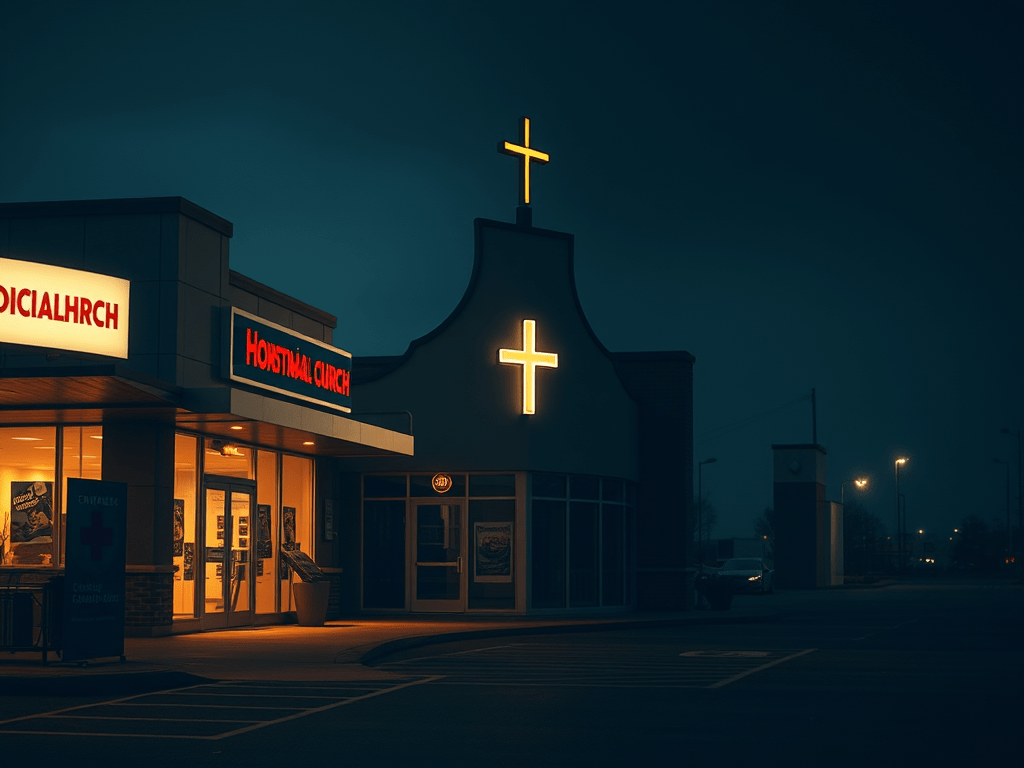
There was a church just off the highway, tucked in a decent-sized strip mall between a gym and a Dollar Tree. Big enough to have a decent budget, clean signage, and a coffee bar that proudly served “locally roasted, mission-minded beans.” From the outside, it looked alive, modern, welcoming, “relevant.”
But something was missing.
It didn’t start that way. When they first opened their doors, it was raw and beautiful. Folding chairs, rough sound, awkward altar calls, but God was in it. People were getting saved. Chains were breaking. You could feel the weight of the Spirit when you walked in, like the whole room had been soaked in prayer and praise.
Then came the rebrand.
It started with a well-meaning vision meeting where the leadership decided they needed to “be more accessible” and “better connect with their community.” Out went the name that referenced Jesus or anything remotely churchy. In came a sleek new name that sounded more like a tech startup or a juice bar than a house of prayer. Something short and trendy, maybe one word, maybe a misspelled one.
The website got a facelift. The sanctuary got a makeover. The sermons got shorter, the music louder, and the vibe cooler.
And it worked, on paper. The parking lot stayed full. The kids’ ministry boomed. Instagram engagement was through the roof. They added more services to accommodate the crowds. But what they gained in polish, they lost in power.
Because while the numbers stayed up, the Spirit quietly walked out.
Worship shifted first. The songs started sounding more like therapy than theology, more me than He. “I am strong. I am chosen. I am enough.” And while there’s truth in those words, it started to feel like God was just a backdrop in our self-love soundtrack. No awe. No glory. Just good vibes and catchy bridges.
The sermons followed. The pastor… once fiery, humble, and soaked in the Word, started sounding more like a motivational speaker with a Bible verse tacked on the end. Turns out, he’d started buying sermon series online. Full sets. Scripts, graphics, discussion questions. All prepackaged and polished.
He stopped studying. Stopped praying through messages. Stopped wrestling with the Word.
And the church felt the effects.
People still clapped. Still took notes. Still posted quotes on social media. But lives weren’t being transformed. Deliverance stopped happening. The altar stayed empty. Baptisms slowed to a trickle.
They kept putting on the show. But it had become just that… a show.
Prayer nights disappeared. Fasting became a footnote. The staff got too busy producing content to actually seek God. Meetings replaced ministry. Marketing replaced intercession. And somewhere in the middle of the fog machines and sermon series branding kits, the presence of God, the thing that once made that little strip mall holy ground, was gone.
But nobody said anything. Because the crowd was still there.
The danger with a full room is thinking it means God is impressed.
Week after week, they filled the seats, filled the schedule, filled the inbox with event reminders. But they weren’t filling heaven. They weren’t making hell nervous. They were just… busy.
Effective? Not at all. Entertaining? Maybe.
Eventually, folks stopped coming to Jesus and just came for the vibe. It became more about feeling good than being made new. They talked about self-improvement, not self-denial. The sermons didn’t confront sin, they comforted it. They didn’t equip people to fight spiritual battles, they handed out participation trophies and playlists.
And when the Spirit left, no one sounded the alarm they didn’t even realize it happened. Because they’d built a system that could run without Him. The lights still came on. The band still played. The pastor still preached. And nobody noticed the glory was gone because they’d trained themselves to function just fine without it.
I wish I could say this story was unique. I wish this was some isolated, cautionary tale from a single church that lost its way.
But honestly? This is the story of the Church in America.
We’ve become experts at hosting services but not the Spirit. We can produce experiences, but can’t provoke transformation. We can sell out conferences, but can’t call down revival.
We’ve rebranded ourselves out of reverence. We’ve exchanged the altar for the algorithm. And we’ve confused emotional moments with holy ones.
We know how to grow a crowd. But we’ve forgotten how to build a dwelling place for God.
And until we stop chasing relevance and start returning to reverence. Until we make it purposeful instead of program, until we fall on our faces and invite the Spirit back in, we’ll keep running churches that look alive…
…but aren’t.
Now, let’s talk about hospitality—not the Pinterest version with fancy charcuterie boards and color-coordinated napkins. I’m talking about real hospitality. The kind that starts in the gut and moves through the heart. The kind that doesn’t care if the baseboards are dusty or the biscuits are burned, because it’s too focused on who’s being welcomed. And I’m not just talking about guests in your home. I’m talking about how we welcome God Himself, into our lives, our churches, our routines.
Here’s the problem: we’ve gotten way too good at faking it.
We’ve learned how to look hospitable. We know how to do the handshake at the door, pour the coffee, smile at the visitors. We know how to play the role. But sometimes, maybe more often than we’d like to admit, it’s just motion without meaning. It’s the dance without the music. We serve, but our hearts aren’t in it. We “host” God on Sundays like He’s a distant relative we feel obligated to invite over. We forget He’s the King, not a guest we can tuck in a corner.
Let’s rewind and take a good look at 1 Samuel 7. This chapter smacks us with what real hospitality toward God looks like. Not ritual. Not routine. Repentance. Reverence. Relationship.
Picture this; The Ark of the Covenant had been captured, then returned by the Philistines; after they realized hosting God’s presence without honor is a good way to end up with plagues and panic. So Israel gets the Ark back and sticks it in the house of a guy named Abinadab in Kiriath Jearim. And there it stays… for twenty years.
Now here’s the thing: the Ark didn’t just sit on a shelf like a dusty trophy. Abinadab’s son Eleazar was consecrated, set apart, for the job of caring for it. That family didn’t just say, “Cool, toss the Ark in the garage.” They prepared. They made space. They appointed someone to be responsible. Why? Because they understood that hosting the presence of God isn’t casual. It’s not a job you wing. It’s sacred.
And I wonder… how many of us have thrown God in the garage?
How many of us have shoved Him into a Sunday morning box and called it good? How often do we show up, sing a few songs, listen to a message, and then go home like we just checked a spiritual box on our to-do list? We act like it’s enough to just “include” Him. But hospitality, real hospitality, requires intention. Preparation. A whole shift in posture.
Samuel, the prophet, sees what’s going on with Israel. They’ve got the Ark back, sure. But they’re still tangled up with idols, Baal, Ashtoreth, all the other distractions of the culture around them. Samuel doesn’t play games. He tells them straight: “If you are returning to the Lord with all your hearts, then get rid of the foreign gods.”
In other words: if you’re gonna invite God in, clean the house first.
Hospitality isn’t just about what you do; it’s about what you remove. You can’t make room for the holy while clinging to what’s unholy. That clutter, the bitterness, the apathy, the idols we polish in secret, that stuff’s got to go if we want God to take center stage. Samuel calls the people to gather at Mizpah for a full-on, no-holds-barred act of repentance.
And this is where things get real.
They fast. They confess. They cry out. This is not some polished church program. This is raw. Messy. Holy. They’re pouring their hearts out before God… and right in the middle of that sacred moment, the Philistines decide it’s the perfect time to attack.
Ain’t that just like the enemy?
You start getting serious about God, start cleaning house, laying it all down, and suddenly everything comes at you. But instead of panicking, Samuel does something wild: he sacrifices a lamb and prays.
He doesn’t fight. He doesn’t flee. He hosts.
And in that moment, God answers with thunder. Literal thunder. So loud and terrifying that the Philistines scatter like cockroaches. God fights for His people, not because they were perfect, but because they were present. Because they’d made room. Because they’d invited Him in for real.
Now catch this: after the victory, Samuel doesn’t just say, “Cool, that was awesome,” and move on. He sets up a stone. A big one. Calls it Ebenezer, which means “stone of help.” He plants that thing right in the middle of the path as a permanent reminder: God showed up here.
We need more Ebenezers in our lives.
Not literal rocks necessarily (though hey, if you want to keep a boulder in your front yard with “God Helped Me” carved into it, I’m all for it). But we need markers, reminders of where and how God has met us. Answered prayers. Healed relationships. Provided when we didn’t have enough. We forget too easily. We treat miracles like memories instead of milestones. Hospitality remembers. It reflects. It stays grateful.
So, what does this mean for us today?
It means stop going through the motions.
It means we need to look at our lives, our homes, our churches, and ask: Are we really hosting God, or just nodding politely as He passes by?
Every act of hospitality, whether it’s welcoming a neighbor or showing up to serve, needs to be fueled by love, not obligation. Every time we set the table, whether it’s for family dinner or communion at church, it should be done with intentionality and awe. Not because we’re trying to earn anything, but because we recognize who we’re inviting in.
Let’s be people who don’t just go to church, let’s be the church.
Let’s be a house where God is welcomed with joy and reverence. Let’s create spaces where He’s not squeezed into the margins but given the whole room. Let’s clear out the clutter and make room for the sacred. Not just on Sundays. Not just when it’s convenient. Every day.
So the next time you feel yourself slipping into routine, whether in life, ministry, or your walk with God……. pause. Remember Mizpah. Remember Ebenezer. And ask yourself:
Am I just setting the table… or am I inviting Him in?
Stay Salty
 Salt, Light, & Hospitality
One response to “Welcoming the Vibe but Not the Voice”
I trust you are fully grasping the insight and revelation you are receiving right now.
LikeLike