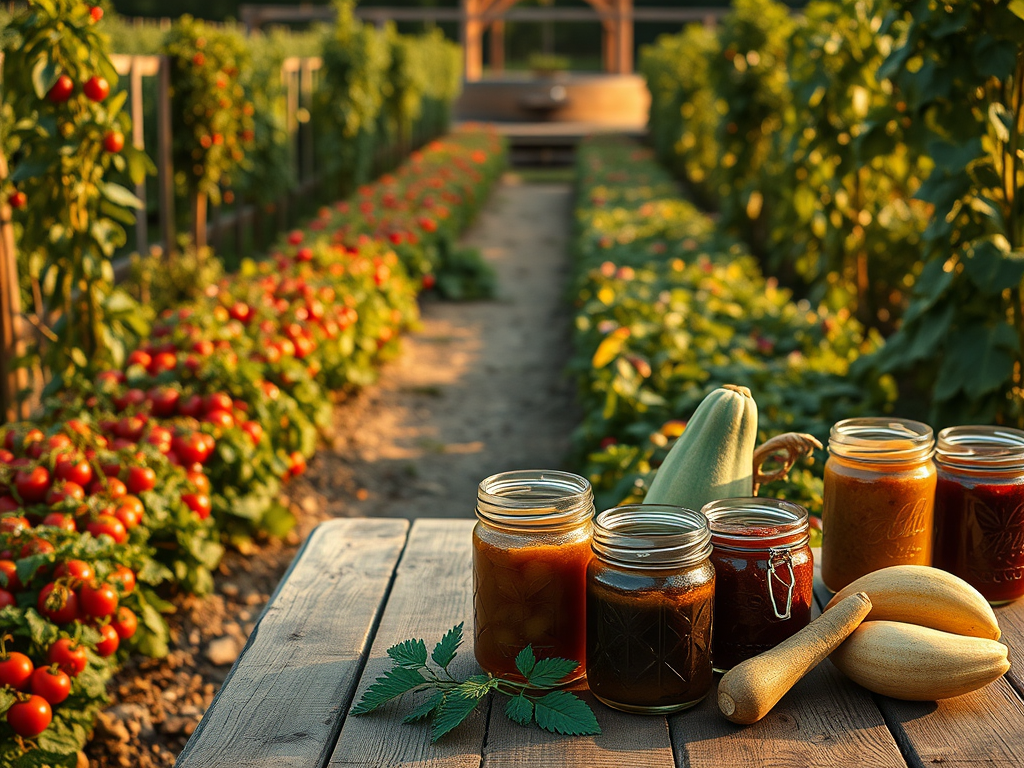
Growing up, my mom’s garden wasn’t just a patch of dirt—it was her magnum opus. Seriously, Eden might’ve taken one look and thought, “Okay, this is a bit much.” Rows of tomatoes, beans, squash, and everything else you’d need for a Southern feast stretched as far as my childhood eyes could see. And come harvest season? It was like she turned into the CEO of Farm-to-Table Enterprises. Our pantry shelves were lined with jars of home-canned goodness, each one a testament to her hard work and God’s provision.
And it wasn’t just the garden. Add a haul from leftovers that were going to be tossed out from the local farmers market and the occasional food donations from church, and somehow, we never went hungry. God’s math didn’t just add up—it multiplied. Looking back now, I see those meals for what they really were: more than food. They were love, care, and a healthy dose of faith all plated up and served with a side of “we’re gonna make it.”
That same care is what I see in the story of Eden. God didn’t just slap some dirt together and call it good; He set the table. Before humanity even got there, He already had the whole menu planned out and the produce aisle fully stocked. Genesis 1:11 gives us the play-by-play: “Let the land produce vegetation: seed-bearing plants and trees on the land that bear fruit with seed in it.” Translation? Adam and Eve walked into a buffet so abundant it made Old Country Buffet look like a kid’s picnic. Talk about VIP treatment.
But here’s the kicker: God’s garden wasn’t just about making sure Adam and Eve didn’t go hungry. It was about connection, relationship, and showing them how deeply He cared. That’s the kind of hospitality that hits deeper than a full belly—it feeds the soul.
So, if God put that much intentionality into setting the table in Eden, maybe we should rethink how we’re setting our own. Whether it’s a big family dinner or just sharing a cup of coffee with a friend, there’s power in how we invite others into our lives. Because if God can prepare a feast with that much thought and love, then our tables—however simple—can become sacred spaces too.
God didn’t just craft Eden with a “let’s wing it” attitude; He went full-on Southern hostess mode. Genesis 1:11 tells us, “Let the land produce vegetation: seed-bearing plants and trees on the land that bear fruit with seed in it, according to their various kinds.” Translation? The table was set before Adam and Eve even knew they’d need a seat. From the first sprout of grass to the juiciest pomegranate, God stocked the fridge, wrote the menu, and laid the foundation for not just survival, but flourishing.
Growing up, I saw this kind of thoughtfulness firsthand, though maybe with a bit more hustle and grit. In our house, it didn’t matter how tight things were—if someone came over, you better believe a pot of coffee or a cup of tea was on the table faster than you could say, “Stay awhile.” Didn’t matter if it was the fancy, good coffee or the bottom-of-the-barrel stuff Mom scored at the dented-can store. Hospitality wasn’t about impressing; it was about offering a seat, a sip, and a sense of belonging. I’ll never forget one particularly lean season when things in our house were tight. Our church came through with some food donations, and among the bags of canned goods and boxed meals, there was something extra special—some meat. This was meant to be our dinner that night. We needed that meal, no doubt about it, but the lessons my parents and the Lanes had planted in me were already taking root in my young mind.
So when one of the mothers of the children that my mom watched in her home daycare walked in our door, looking a little worse for wear, and complaining about how tough things were. I didn’t hesitate. I offered it up, handed it over with a smile, and waved goodbye to what should’ve been our supper. I’d like to tell you it was a proud moment for everyone, but the truth is my mom was as my friends and I would joke “not amused”. That meat wasn’t just food—it was hope on a plate for our family, and she wasn’t thrilled to see it walking out the door.
But here’s the thing: the seeds of generosity she and my dad had sown in me couldn’t be undone, even in her frustration. My parents, and our church family—especially the Lanes—had shown me over and over what it looked like to give, even when there wasn’t much to spare. I didn’t fully understand it then, but they had taught me the sacred act of trusting that God’s provision would come through, even when it seemed impossible.
So my mom stood there, quiet for a long moment, and let that dinner go. She may have been angry, but she didn’t stop me. And that silent moment spoke louder than words: the lesson she’d taught me—to care for those in greater need—was worth more than a single meal.
That night, we scraped together a makeshift dinner from what we had left, and sure enough, it was enough. It always seemed to be enough. Looking back, I see how those lessons shaped me, how they mirrored the kind of hospitality God shows us. In Eden, He prepared abundance and trusted it would sustain. In our home, even with so little, we trusted the same—and somehow, there was always another meal.
This mindset—this faith in the abundance of God’s provision—mirrored what He did in the Garden. Long before we ever felt the pangs of hunger or dreamed of a place at His table, He was already planning. Eden wasn’t just a garden; it was a feast, prepped and plated with love and intentionality. Every fruit, every tree, every little herb growing wild was an act of care, a declaration that God doesn’t just meet our needs—He exceeds them.
If God put that much effort into setting the table in Eden, it makes me think about how we’re setting ours. Whether it’s a hearty meal for loved ones or just offering a simple cup of tea to a neighbor who stops by, it’s about more than food. It’s about saying, “You’re welcome here. You’re seen. You’re cared for.”
Because in God’s house—just like my mom’s—there’s always room at the table, always a fresh pot brewing, and always a reminder that the best meals start with the heart of the host.
He’s the ultimate host. The Creator of the universe took the time to prep a feast, not just to fill bellies but to fill lives. It wasn’t just food; it was a whole experience, designed for us to savor, to enjoy. And if God Himself shows us that level of intentionality, why do we struggle to do the same? God didn’t slap something together last minute; He had everything ready for that first moment when humanity walked in. We could learn a thing or two, right? If He’s willing to go the extra mile to create a space where we feel valued and cared for, maybe we should start being a little more intentional with our own hospitality.
When God gave Adam and Eve “every seed-bearing plant on the face of the whole earth and every tree that has fruit with seed in it,” He wasn’t just passing out survival food. This wasn’t about hunger, but about fellowship. The food in the garden wasn’t just fuel; it was a way to connect—with each other, with the earth, with God Himself. In Eden, food was a bridge to relationship. Every meal was a reminder that they were cared for, that they were known and loved.
Think about it. How many of our own best memories have food tied to them? Mom’s cookies, family movie night with popcorn, dad’s steaks he would only cook every once and a while. The food is more than a meal; it’s a gateway, a spark that opens up those moments. To this day, if we haven’t seen someone in years, what’s the first thing we say? “Hey, let’s grab a coffee sometime.” Maybe that’s not just culture. Maybe we’re hard-wired by God Himself to share life over a meal, to let food be the connector, the doorway to deeper connection. It’s a tool, designed for us to build bonds.
When God welcomed Adam and Eve into Eden, He didn’t just say, “Go wild, do whatever.” Nope. He gave them one boundary: don’t eat from this particular tree. And that’s not some throwaway rule. It was intentional, a guideline that required trust. God wasn’t trying to kill their vibe; He was making it clear that real relationships, real love, require trust and boundaries. This was freedom, but with purpose.
And here’s where it hits home for us. We’ve got two extremes: some people build walls so thick and high that nobody ever gets in, while others throw the doors wide open and let people walk all over them. But God’s example shows us that true hospitality means welcoming others with open arms but also having lines that protect the health of the relationship. Those lines aren’t barriers; they’re safeguards that keep the good stuff in and the harmful stuff out.
God’s garden wasn’t just about beauty and food; it was the original model for community. Eden was a place where Adam and Eve could thrive, where they could connect with God and each other. And if we’re supposed to reflect God’s character, our churches, our homes, our spaces should echo that. True hospitality isn’t just opening the door; it’s creating an environment that says, “You belong here.” It’s a space where people can breathe, where they feel safe, welcomed, and known.
Imagine if we, as the church, started treating hospitality like God did. If we stopped with the rushed hellos and actually made our homes and our churches places where people felt like they could truly rest, connect, and be themselves. God set the bar high, not because He had to, but because He wanted to. He created a world that shouted, “You matter. You’re cared for.” Let’s be people who echo that, who prepare our tables and open our doors, offering others a taste of the God who’s been setting the table from the beginning.
God’s provision in Eden wasn’t just about food—it was His way of saying, “You’re home.” It’s a reminder that in God’s house, there’s always a seat for everyone, a place where every meal is a celebration of connection, love, and belonging. So, why don’t we make a little more room at our tables?
 Salt, Light, & Hospitality